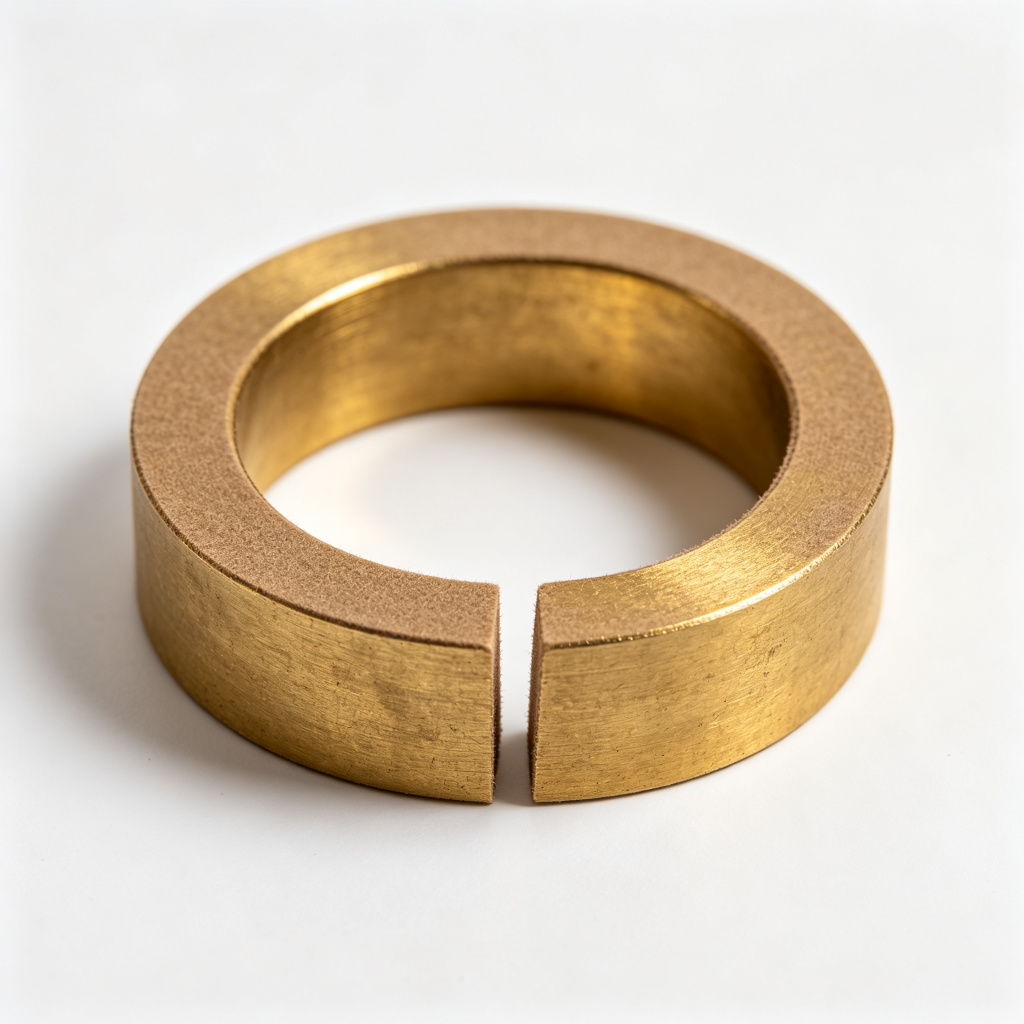
A hydraulic guide ring, also called a wear ring or guide bushing, is a non-elastic ring fitted into the grooves of a piston or piston rod to guide sliding movement and absorb side load in a hydraulic cylinder. We supply this hydraulic guide ring in phenolic fabric and PTFE composite, with a split-ring design that installs directly into the groove without dismantling the seal set. It guides the piston and rod, absorbs lateral forces, and prevents direct metal-to-metal contact between the moving parts and the cylinder bore or gland.
What Is a Hydraulic Guide Ring
A guide ring sits next to the dynamic seals rather than acting as a pressure seal itself. Its job is to keep the piston and rod aligned along the cylinder axis, carry the radial load that comes from offset forces or bent rods, and protect the sealing elements from uneven wear and extrusion into the clearance gap. In a tube-and-gland assembly, the hydraulic guide ring takes the side load so the piston seal and rod seal can concentrate on sealing the fluid, which extends seal life and reduces scoring on the bore and rod surface.
The ring is usually a split ring with a rectangular or trapezoidal cross-section and rounded or chamfered edges. The split lets it spring open and seat into the groove during assembly, while the chamfers protect the seal lips and the groove corners from edge loading.
Materials: Phenolic Fabric and PTFE Composite
We produce the guide ring from two main material families:
- Phenolic fabric (phenolic resin reinforced with cotton or synthetic fabric): high load capacity, good wear resistance and stable dry-sliding performance, suited to long-stroke and heavy-duty cylinders
- PTFE composite: low friction, good chemical resistance and smooth sliding, used where low break-out force or corrosive fluid conditions matter
The phenolic fabric grade is the common choice for general hydraulic cylinders and long-stroke applications, where the ring must carry steady side load over many cycles. The PTFE composite grade serves lighter-duty and chemically aggressive service. Material choice depends on pressure, stroke length, fluid type and the bore or rod diameter.
How the Guide Ring Works in a Cylinder
When the cylinder extends and retracts, the piston and rod slide along the bore and gland. Without a guide ring, side load pushes the moving part against the metal wall, causing metal-to-metal contact, scoring, oval wear and premature seal failure. The hydraulic guide ring takes that lateral force on its sliding surface, keeps the running clearance even, and keeps the seal lips square to the groove.
It works as part of a complete seal set together with the piston seal, the piston rod seal and the wiper seal. The piston seal holds pressure across the piston, the rod seal prevents fluid escaping along the rod, and the wiper keeps dirt and moisture out; the guide ring supports all three by maintaining alignment and reducing their side loading.
Applications and Working Conditions
This wear ring is used in hydraulic cylinders across construction machinery, material handling equipment, hydraulic press systems, machine tools and industrial hydraulic stations. It is especially suited to long-stroke applications, where a long sliding distance would otherwise wear the bore and rod quickly, and to cylinders that run under offset or intermittent side load.
Typical operating roles include guiding the piston in double-acting cylinders, guiding the rod through the gland, and protecting the cylinder bore and rod surface from contact damage. Because the ring is a sacrificial wear component, it can be inspected and replaced at maintenance intervals, which protects the more expensive bore, rod and seal set.
For more background on how these rings support seal life, see how guide rings improve seal performance.
Installation and Replacement
The split guide ring seats into the machined groove on the piston or rod. During assembly, the ring is opened slightly, placed in the groove and checked that it sits flat without twisting or overlapping. At maintenance, worn rings are identified by visible flattening, cracking or loss of wall thickness; replacing them on schedule prevents side load from reaching the seals and the metal surfaces.
We supply rings matched to your bore and rod diameter, groove width and material requirement. The standard minimum order quantity is 200 pieces, and we accept OEM orders with your marking and packing.
Custom Service and Why Buy From Us
Send us your cylinder drawing or the bore and rod dimensions, and our engineers will confirm the guide ring material, cross-section and split type for your application. We hold regular stock of common phenolic fabric and PTFE composite rings for trial orders, and we adjust the compound and finish to your working conditions.
Browse our full hydraulic seal range, including the piston seal, piston rod seal and wiper seal for a complete cylinder sealing set.