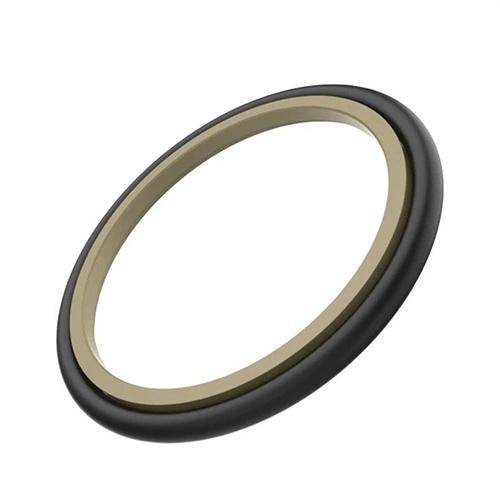
A step seal is a main dynamic rod seal installed in the cylinder head of a hydraulic cylinder. It runs along the piston rod as it extends and retracts, preventing hydraulic oil from leaking out along the rod and helping the system maintain working pressure. This step seal combines a bronze filled PTFE slide ring with an NBR energizer O-ring, giving the sliding element low friction and wear resistance while the elastomer ring keeps the sealing face loaded against the rod.
What Is a Hydraulic Cylinder Step Seal
The step seal belongs to the rod seal group, which seals between the moving piston rod and the gland. Unlike a static gasket, it contacts a sliding surface on every stroke, so it must balance tight sealing against low friction, wear resistance and tolerance for pressure cycles. Its stepped geometry seats into the gland groove and lets the energizer press the PTFE slide ring against the rod surface to maintain contact even as wear develops.
This rod-side step seal is typically fitted as the primary dynamic seal, working alongside the piston seal on the piston and the wiper seal at the gland entrance. The piston seal holds pressure across the piston, the wiper keeps dirt and moisture out, and the step seal stops fluid escaping along the rod. When you assemble a complete cylinder sealing set, these elements are selected together so pressure retention and contamination control are covered at each position.
Construction: PTFE Slide Ring and NBR Energizer
Each step seal is made from two functional parts:
- Slide ring: bronze filled PTFE. The bronze filler improves wear resistance, thermal conductivity and extrusion resistance, while the PTFE base provides a smooth, low-friction sliding surface against the rod.
- Energizer O-ring: NBR standard grade. The elastomer O-ring sits behind the slide ring and supplies the constant radial force that keeps the sealing face pressed against the rod. For high-temperature service, an FKM energizer is available as an optional alternative to NBR.
The PTFE slide ring handles the sliding contact, and the energizer compensates for seal wear and rod surface irregularity. This combination suits repeated back-and-forth motion where a plain elastomeric lip would otherwise wear quickly or generate excessive friction. For background on matching seal materials to pressure, temperature and fluid, see this rod seal material selection for hydraulic cylinders.
Sizes and Cross Sections
The metric standard range covers rod bore or seal inner diameters from 10mm to 530mm. Common cross sections are 4.2mm, 6.3mm and 8.1mm, and the step seal can be produced in custom non-standard sizes to match an existing gland groove or an aftermarket replacement requirement.
When ordering, specify the rod diameter, the groove dimensions and the required cross section, together with the energizer material and any particular fluid or temperature condition. Custom dimensions are produced to the supplied drawing or measured sample, and the seal profile is confirmed against the gland so it seats without twisting or overlapping.
Pressure, Fluid Compatibility and Installation
This step seal is rated for a maximum pressure of 40MPa and is compatible with mineral hydraulic oil. It is installed in the cylinder head gland, where the slide ring rides on the rod and the energizer stays seated in the rear groove. During assembly, the ring should be checked that it lies flat in the groove, that no twist or overlap remains, and that the rod surface is free of scoring, rust or damage that could wear the seal prematurely.
Because the seal is a dynamic component, maintenance inspection should check for extrusion cuts, hardening, swelling, cracked rings or loss of energizer elasticity. If leakage develops after service, the rod surface, gland condition and fluid compatibility should be reviewed alongside the seal itself. Material choice for the energizer depends on operating temperature and fluid type: NBR is the economical general choice for mineral oil service, while FKM is selected for higher temperature or more aggressive fluid conditions.
Typical Applications
The step seal is widely used as the main rod seal on hydraulic cylinders in mobile and industrial equipment. Common applications include excavators, loaders, forklifts, injection molding machines and general industrial hydraulic cylinders. It suits rods that cycle frequently, where the seal must retain oil under pressure while sliding smoothly over the rod surface.
Related sealing components in the same cylinder include the hydraulic guide ring, which keeps the rod aligned and carries side load, and the piston seal, which retains pressure on the piston side. For a matched replacement set, our hydraulic cylinder seal kit covers the rod seal, piston seal and wiper elements needed for a complete reseal.
MOQ, Custom Sizes and OEM Service
Standard sizes have a minimum order quantity of 10 pieces, while custom non-standard sizes have a minimum order of 50 pieces. We provide OEM and ODM service, including custom marking and packing to your requirements. Send us your rod diameter, groove dimensions, cross section and working conditions, and we will confirm the step seal material, energizer compound and size for your cylinder.
Browse our full hydraulic seal range, including piston seals, rod seals, wiper seals and guide rings for construction machinery and industrial hydraulic systems.